
Roof Types Santa Clara County: 6 Options Compared for 2026
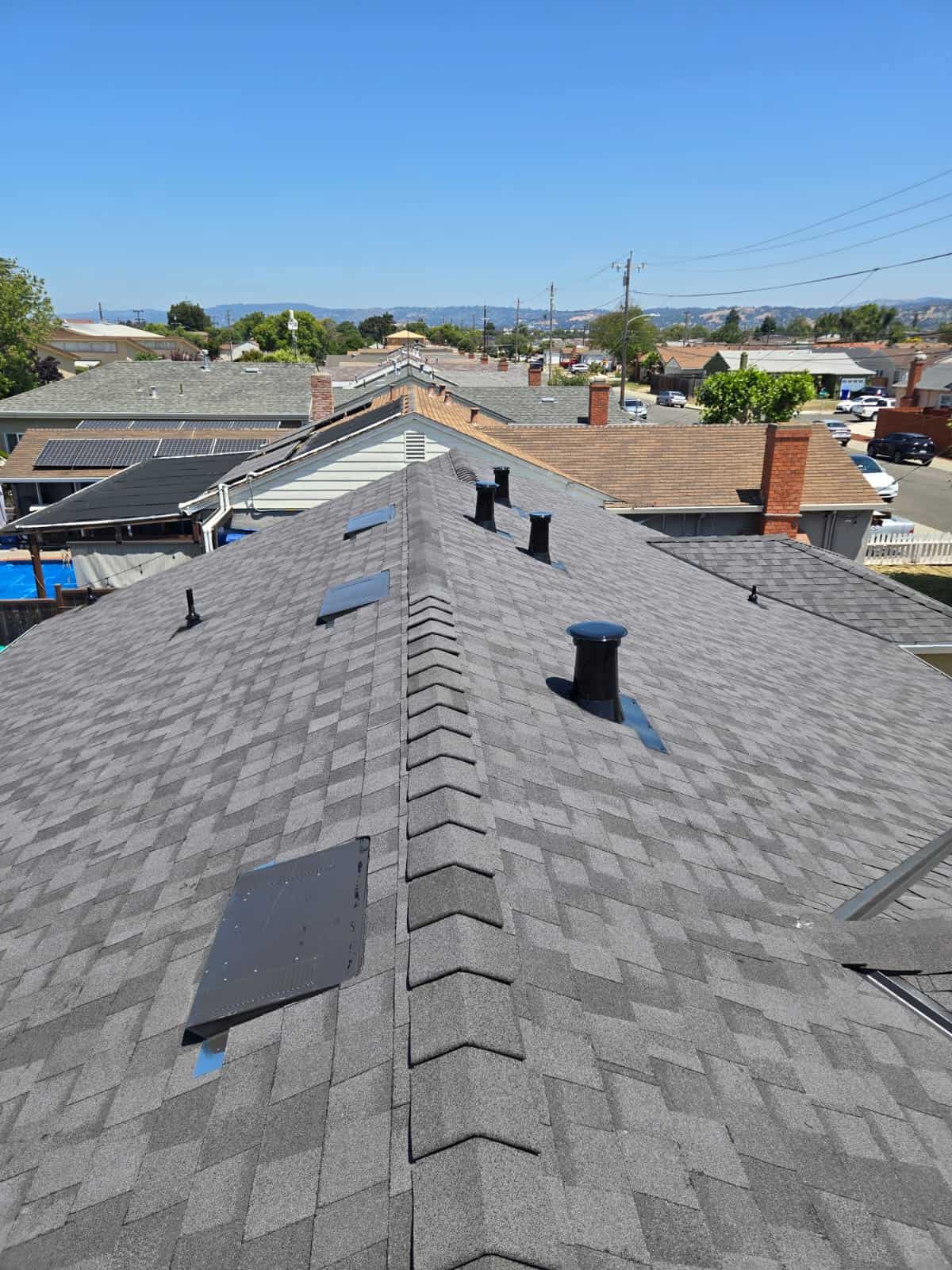
San Jose, CA. The six roof types Santa Clara County homeowners compare most often are asphalt shingle, concrete tile, clay tile, standing-seam metal, TPO membrane for flat sections, and wood shake, which local fire codes are steadily pushing out. Which one actually fits your house depends less on looks and more on three things: whether your address sits inside a state-mapped fire hazard severity zone, your roof's pitch, and California's Title 24 cool-roof requirement for reroof permits filed in 2026 and after.
Flat San Jose neighborhoods and the hillside edges of Los Gatos, Saratoga, and Morgan Hill can land in different fire zones within a few blocks of each other, so the right choice here is really the roof type that clears your specific zone's rules first and your budget second.
Quick overview
- Asphalt shingle is still the most common roof type in the county, running roughly $3 to $5 per square foot installed with a 15 to 30 year lifespan.
- Standing-seam metal costs $5 to $16 per square foot and can last 30 to 80 years, and it qualifies as Class A fire-rated on its own in most assemblies.
- Concrete tile ($7 to $19 per square foot) and clay tile ($8 to $25) can outlast 50 years, though the underlayment beneath them typically needs replacing every 20 to 30 years.
- TPO membrane handles flat or low-slope sections at $4 to $10 per square foot, lasting 10 to 25 years depending on thickness.
- A state-designated Fire Hazard Severity Zone, which covers hillside pockets of Los Gatos, Saratoga, and nearby unincorporated county land, narrows which roof types Santa Clara County code actually allows, regardless of what you'd prefer.
- Reroof permits filed in 2026 or later also trigger California's Title 24 cool-roof reflectance rule, on top of any fire-zone requirement.
Which roof types qualify as Class A in a Santa Clara County fire hazard zone?
Concrete and clay tile are inherently noncombustible, so they qualify on their own. Standing-seam metal qualifies too, once it's installed over an approved underlayment rather than bare decking. Asphalt shingle can also carry a Class A rating, but only specific product lines, and the rating covers the full roof assembly rather than the shingle alone. That means a Class A shingle laid over non-rated felt can still fail inspection as an assembly, even though the shingle itself is rated. Wood shake is the one common type that generally doesn't qualify unless it has been fire-retardant treated and separately listed by the State Fire Marshal, which is a large part of why it's disappearing from newer roofs in the hillside communities.
If you're not sure whether your parcel falls inside a mapped zone, the Santa Clara County Fire Department's local fire hazard severity zone maps cover Campbell, Cupertino, Los Altos, Los Gatos, Monte Sereno, Saratoga, and the surrounding unincorporated areas, and the maps were updated as recently as February 2025.
How much do these roof types cost installed?
Asphalt remains the most affordable of the roof types Santa Clara County homeowners compare, running $3 to $5 per square foot installed, which is why it still covers most standard-slope homes across the county. Concrete tile sits noticeably higher at $7 to $19 per square foot, and clay tile higher still at $8 to $25, partly because tile is heavier and sometimes requires the roof structure to be checked or reinforced before installation begins.
Metal spans the widest range of the common roof types Santa Clara County contractors quote, from $5 to $16 per square foot, since standing-seam pricing depends heavily on panel gauge and finish. None of these figures include tear-off of an existing roof, structural work, or permit fees, which is why a bid should always itemize labor, materials, tear-off, and permits separately instead of handing you one combined number.
Which roof type lasts the longest?
Among the roof types Santa Clara County residents compare, tile is the longevity leader on paper. Clay tile can run 50 to 100-plus years, and concrete tile typically lasts a bit less but still comfortably past the half-century mark. Metal is the other long-hold option at 30 to 80 years, a wide range that covers everything from a basic exposed-fastener panel to a premium standing-seam system. Asphalt shingle is rated for 15 to 30 years, and most homeowners here see something closer to the middle of that range with normal upkeep.
The catch with both tile types is the underlayment underneath, the actual waterproofing layer, which usually needs replacing every 20 to 30 years even while the tiles on top still look untouched. A contractor who tells you a 60-year-old tile roof needs no work without checking the underlayment is skipping the part that keeps the water out.
Does Title 24 limit which roof types Santa Clara County homeowners can pick?
It adds a requirement, but it doesn't rule much out. California's Title 24 energy code applies a cool-roof standard to most reroofing permits filed in 2026 and after, setting minimum aged solar reflectance and thermal emittance so the roof absorbs less heat. According to the City of Santa Clara's re-roof compliance guidance, steep-sloped roofs need an aged solar reflectance of at least 0.20 and a thermal emittance of at least 0.75, while low-slope roofs need a much higher reflectance of at least 0.63 at the same emittance, unless the project qualifies for one of several listed exemptions, such as roofs with at least R-38 ceiling insulation or no ducts in the attic.
Most manufacturers now sell cool-rated lines across asphalt, tile, and metal that meet the standard while still looking like a standard product, and the way to confirm it is to ask for the Cool Roof Rating Council label on the specific product being quoted rather than taking a verbal assurance.
What about flat sections, additions, and garages?
Plenty of homes across the county have at least one flat or low-slope section, over a porch, an addition, or a detached garage, where shingle or tile isn't a workable option. TPO membrane is the standard answer there, running $4 to $10 per square foot installed with a 10 to 25 year lifespan depending on membrane thickness and how it's fastened. TPO also qualifies as Class A in a properly installed assembly, which matters even on a home where the main roof is tile or shingle and only a small section is flat.
Getting the right roof type for your city within the county
Fire zone boundaries, roof pitch, and Title 24 exemptions interact differently depending on exactly where you live, so the right pick for a flatland San Jose ranch isn't automatically right for a hillside home in Los Gatos or Saratoga. We work across Santa Clara County, including Cupertino, Campbell, Morgan Hill, and Milpitas, and we've written more detail on specific roofing materials for San Jose homes if you want the city-level version of this comparison.
If you already know you need a full reroof, our residential roof replacement team can quote each of these roof types separately for your actual address and fire zone, rather than steering you toward one option. If it's a section repair rather than a full material change, our residential roof repair team can scope that instead, and our guide on vetting a roofing contractor's bid covers the questions worth asking before you sign anything. Whichever of these roof types Santa Clara County code allows for your parcel, contact us and we'll check your zone and pitch before recommending anything.
Frequently asked questions
What's the most common roof type in Santa Clara County?
Asphalt shingle, mainly on cost. It runs $3 to $5 per square foot installed and covers most standard-slope homes in the county.
Do I need a Class A roof where I live?
It depends on your parcel. Hillside areas of Los Gatos, Saratoga, Monte Sereno, and nearby unincorporated land fall inside state-mapped fire hazard severity zones that require a Class A assembly. Check the county fire department's zone maps for your specific address rather than assuming either way.
Which roof type lasts the longest?
Clay tile, typically 50 to 100-plus years, with concrete tile close behind. Metal can also reach 80 years on the high end, though the underlayment beneath tile still needs periodic replacement even when the tile itself holds up.
Does Title 24 mean I can't use asphalt shingle anymore?
No. Most manufacturers sell cool-roof-rated shingle lines that meet Title 24's reflectance requirement while still looking like a standard shingle. Ask for the CRRC label on the specific product you're quoted.
Is metal roofing worth the higher upfront cost?
For homeowners planning to stay long-term, often yes. A metal roof at $5 to $16 per square foot can outlast two or three asphalt reroofs over the same stretch of years, which changes the comparison once you factor in how many times you'd otherwise replace an asphalt roof.
Roof types Santa Clara County: summary
Asphalt shingle is the affordable, shorter-lived option and still the default for most standard-slope homes. Metal costs more upfront but can outlast two or three asphalt reroofs. Tile costs the most and lasts the longest, with underlayment as the maintenance item most homeowners forget about. TPO covers flat sections regardless of what the main roof is made of, and wood shake is fading out as fire zone rules tighten.
Check your Fire Hazard Severity Zone status before assuming any of these roof types is automatically compliant, and confirm Title 24 compliance with the CRRC label on your specific product. If you'd rather skip the research and get a straight, itemized bid comparing roof types for your actual address, contact us and we'll walk you through it.
Contact Information
Avera Roofing & Remodeling
325 South 1st Street #120
San Jose, CA 95113
United States
(855) 375-8844
https://averaroof.com/